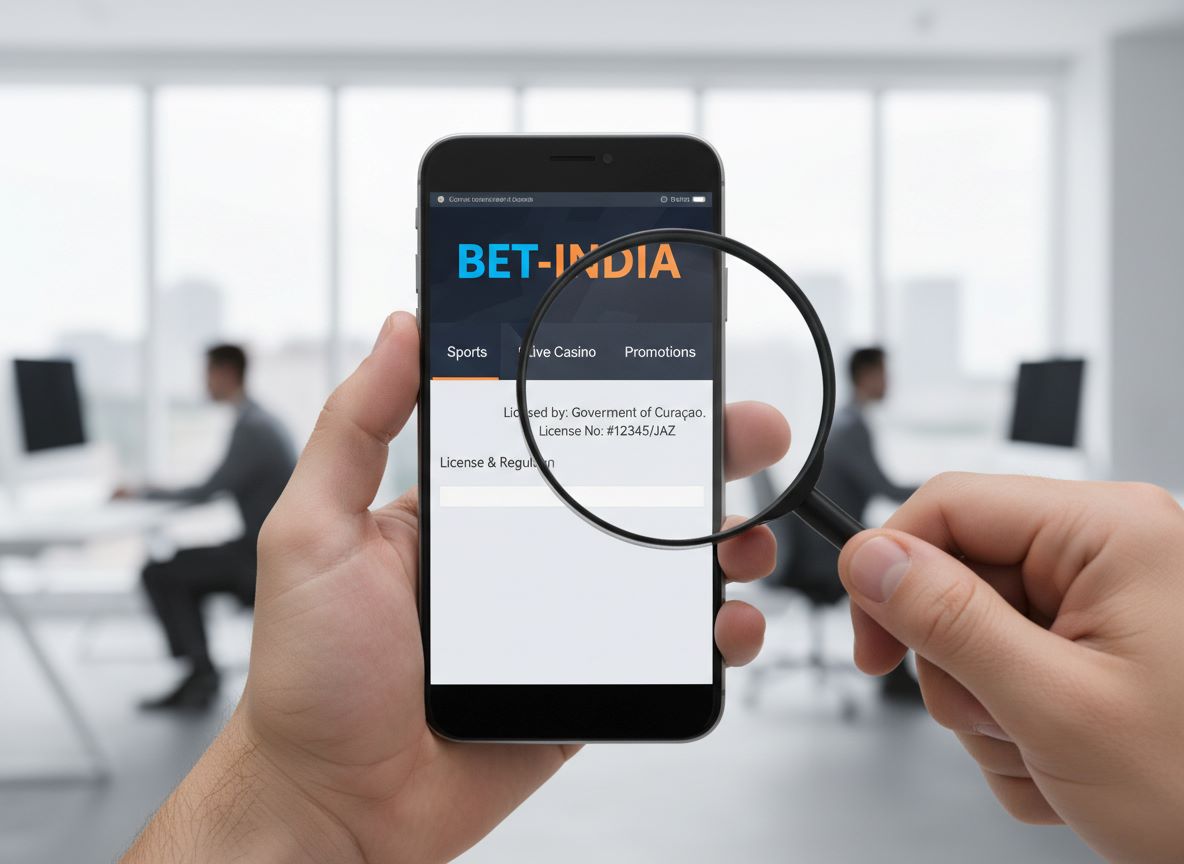
Many betting sites claim to operate legally in India, but these assertions can be misleading or outright false. Indian users face the challenging task of separating legitimate licensed operators from unlicensed platforms that make bold legal claims without backing them up. Before depositing any money, verifying a betting site’s actual licence status is crucial to protect your funds and personal data.
This guide will explain what constitutes a valid gambling licence, where to find the critical details, and how to spot fake or outdated licensing claims. We’ll provide a practical verification workflow that goes beyond accepting marketing language at face value, giving you the tools to independently confirm whether a betting site has genuine regulatory oversight.
What a valid betting licence means for Indian users
A valid betting licence represents formal authorization from a recognized gambling authority, with specific terms covering the issuer, validity period, jurisdiction, and scope of permitted activities. The licence must be current, issued to the actual company operating the website, and cover the specific types of betting offered to players. For Indian users, this means looking beyond generic claims of “being licensed” to verify the actual regulatory framework.
Legal status for Indian players depends on multiple factors including state-specific gambling laws, the type of games offered, and whether the operator provides services directly or through offshore channels. A licence from a foreign jurisdiction doesn’t automatically make betting legal for Indian residents, but it does indicate regulatory oversight and potential recourse options. Understanding this distinction helps users make informed decisions about which platforms to trust.
The complexity increases when considering that different states in India have varying approaches to gambling regulation. Some states permit certain forms of skill-based gaming, while others maintain stricter prohibitions. Licensed operators may serve Indian players through offshore structures, but users should understand that this doesn’t guarantee full legal protection under Indian law.
Legitimate licensing involves ongoing compliance requirements, financial audits, and player protection measures that unlicensed sites typically cannot or will not implement. This regulatory framework provides a foundation of accountability that benefits users, even when operating in legally complex jurisdictions like India.
Licensed vs unlicensed: the basic difference
A genuine gambling licence demonstrates that the operator has undergone regulatory scrutiny, maintains required financial reserves, and follows established protocols for handling player funds and disputes. Licensed operators must report to their regulatory authority and can face sanctions or licence revocation for violations. This oversight creates accountability that unlicensed sites completely lack.
Common claims that fall short of actual licensing include generic security certifications, payment processor approvals, or vague references to “international standards.” These badges and certifications may indicate technical compliance in specific areas, but they don’t provide the comprehensive oversight that comes with a gambling licence. Marketing language often inflates these lesser credentials to suggest full regulatory approval.
The practical difference becomes apparent when problems arise. Licensed operators typically have established complaint procedures and regulatory oversight that can intervene in disputes, while unlicensed sites operate without external accountability or standardized resolution processes.
Why Indian players should verify the licence first
- Withdrawal protection: Licensed operators face regulatory consequences for withholding player funds without valid reasons, while unlicensed sites can freeze accounts with no external oversight
- Complaint resolution: Regulatory authorities often provide dispute resolution services for licensed operators, giving players recourse beyond direct negotiation with the site
- Data security: Licensing requirements typically include data protection standards and regular security audits that unlicensed platforms may ignore
- Financial stability: Licensed operators must demonstrate adequate capitalization and segregate player funds, reducing the risk of sudden closure or inability to pay winnings
- Game fairness: Regulatory oversight often requires independent testing of random number generators and payout percentages, ensuring games aren’t manipulated against players
Which licence details you should check on the site
Every legitimate betting site should prominently display specific licence information including the issuing authority’s name, licence number, validity dates, and the exact company name authorized to operate. This information typically appears in the website footer, on a dedicated licensing page, or in the terms and conditions. The details should be specific, verifiable, and current.
Red flags include vague references to licensing without specific details, images of certificates that can’t be independently verified, or licence information that doesn’t match the company name used in payment processing or customer communications. Some sites display expired licences or reference suspended operators, hoping users won’t verify the current status.
| Checkpoint | What to look for | Why it matters |
|---|---|---|
| Licence Number | Specific alphanumeric code or registration number | Allows verification against regulator’s official database |
| Issuing Authority | Full name of regulatory body (e.g., Curacao Gaming Control Board) | Identifies which jurisdiction and standards apply |
| Validity Dates | Issue date and expiration date clearly stated | Confirms current authorization and renewal compliance |
| Licensed Company | Exact legal name matching payment processors | Prevents shell companies from misusing others’ licences |
| Authorized Domain | Website URL specifically listed in licence terms | Prevents licence fraud by copycat sites |
| Contact Information | Business address and regulator contact details | Enables independent verification and complaint filing |
| Permitted Activities | Specific gaming types covered by the licence | Ensures the site isn’t exceeding authorized scope |
Missing registration numbers, mismatched company names, expired validity periods, or vague footer text about licensing should trigger immediate caution. Legitimate operators have no reason to hide or obscure their licensing details, as these represent significant business investments and competitive advantages.
The most reliable approach involves cross-referencing information from multiple sources on the same website. Licence details in the footer should match those on dedicated compliance pages, in terms of service, and in any displayed certificates or badges.
Licence number, issuer, dates, and authorised domain
The licence number serves as the primary identifier for verification and should appear consistently across all mentions of the licence on the site. This number allows direct lookup in the regulator’s database, making it the most important piece of information for independent verification. Legitimate operators display this number prominently and consistently.
Issuer information must specify the exact regulatory authority, not just the country or general jurisdiction. For example, “licensed in Curacao” is insufficient compared to “licensed by the Curacao Gaming Control Board under licence number XXX.” The specific regulator determines which standards apply and where complaints can be filed.
Validity dates prove current authorization and help identify operators running on expired licences. Some sites display historical licensing information without clearly indicating current status, while others may reference pending renewals without confirming active authorization during the interim period.
The authorized domain should exactly match the website URL you’re visiting. Some licences specify particular domains or subdomains, and operators using different URLs may be exceeding their authorization or operating without proper coverage for that specific site.
How to verify the licence against the regulator
Independent verification through the issuing authority’s official channels provides the most reliable confirmation of licence validity. Most established gaming regulators maintain public databases or registers where licensed operators can be searched and confirmed. This verification process separates legitimate licensing from fake claims or expired authorizations.
Offshore licences common in the online betting industry typically offer some form of public verification, though the accessibility and detail of information varies between jurisdictions. Some regulators provide comprehensive online databases, while others require email inquiries or phone verification for detailed confirmation.
- Identify the specific regulatory authority mentioned in the betting site’s licence information
- Locate the regulator’s official website through independent search, not through links provided by the betting site
- Find the public register or licensed operator database on the regulator’s website
- Search for the company name and licence number exactly as displayed on the betting site
- Confirm that dates, authorized activities, and contact information match between sources
- Verify the licence status shows as active, current, or in good standing
- Check if any restrictions, conditions, or pending enforcement actions are noted
Step-by-step licence verification process
- Copy the exact licence number and company name from the betting site’s licensing section
- Navigate to the regulatory authority’s official website using independent search results
- Locate the licensed operators database or public register section
- Search using both the licence number and company name to cross-reference results
- Compare the returned information against what’s displayed on the betting site for consistency
- Confirm the licence status indicates current validity without restrictions or suspensions
What to do if the regulator has no record
The absence of a betting site’s licence in the regulator’s official records represents a serious red flag that should pause any deposit plans immediately. This could indicate expired licensing, fraudulent claims, or administrative issues that leave the operator without current authorization. No legitimate reason exists for a licensed operator to be absent from their regulator’s official records.
Incomplete data, inconsistent company information, or suspended status in the regulatory database similarly warrant extreme caution. Some operators continue marketing their licensing while facing enforcement actions or operating under restricted conditions that may affect player protection and fund security.
The appropriate response involves demanding current proof of authorization directly from the operator before proceeding with registration or deposits. Legitimate licensed operators can quickly provide verification documents, regulatory correspondence, or direct contact information for their supervising authority.
How to evaluate the betting site’s legal and technical signals
Beyond basic licence verification, legitimate betting sites demonstrate compliance through multiple technical and operational signals that support their regulatory claims. These markers include comprehensive KYC procedures, AML compliance measures, SSL encryption, responsible gaming tools, and transparent payment policies that align with licensed operator standards.
For sites offering casino-style games, independent RNG audits and testing certificates from recognized laboratories provide additional validation of regulatory compliance. These technical audits complement licensing oversight and demonstrate ongoing commitment to fair gaming standards that regulators typically require.
| Signal | Good sign | Warning sign |
|---|---|---|
| KYC Requirements | Mandatory identity verification before withdrawals | No identity checks or optional verification only |
| SSL Security | Current certificate from recognized authority | Expired, self-signed, or missing encryption |
| Responsible Gaming | Deposit limits, timeouts, self-exclusion tools | No player protection tools or hidden options |
| Payment Transparency | Clear withdrawal terms and processing times | Hidden fees, vague conditions, or no withdrawal policy |
| Game Auditing | RNG certificates from eCOGRA, iTech Labs, or GLI | No testing certificates or unrecognized auditors |
| Financial Transparency | Segregated player accounts, published RTP rates | No financial disclosures or fund separation details |
However, these technical and operational markers support but cannot replace proper licensing verification. Unlicensed sites may implement some security measures or responsible gaming tools to appear legitimate, but without regulatory oversight, these protections lack external enforcement and may be removed without notice.
Security, payments, KYC, and responsible gaming
Comprehensive KYC procedures indicate compliance with anti-money laundering regulations that licensed operators must follow. This includes identity verification, address confirmation, and payment method validation that creates audit trails regulators require. Sites avoiding or minimizing these procedures may be operating outside regulatory frameworks.
Payment transparency through clear terms, reasonable processing times, and established financial institutions suggests operational legitimacy that supports licensing claims. Licensed operators typically work with reputable payment processors who conduct their own compliance reviews and require proper regulatory documentation.
Responsible gaming tools represent regulatory requirements in most licensed jurisdictions, including deposit limits, cooling-off periods, and self-exclusion options. The quality and accessibility of these tools often reflects the operator’s regulatory environment and commitment to compliance standards.
While these factors enhance user safety and suggest legitimate operations, they supplement rather than replace licence verification. A properly licensed but poorly operated site may still create problems, while an unlicensed site with good security practices still lacks regulatory protection and oversight.
Common licence claims used by betting sites targeting India
Betting sites targeting Indian players frequently reference Curacao licensing, which represents legitimate offshore regulation but doesn’t constitute approval for Indian operations specifically. Marketing language often overstates what such licences actually permit, creating confusion about legal status for Indian residents while technically maintaining truthful claims about regulatory authorization.
State-level gaming permissions in India typically cover skill-based games rather than traditional sports betting or casino gambling, yet some operators use these authorizations to suggest broader legal approval. Understanding these distinctions helps Indian players evaluate licensing claims more accurately.
- Curacao eGaming licences provide legitimate offshore regulation but don’t guarantee legal operation within India’s jurisdiction
- Malta Gaming Authority licences offer stronger regulation but similarly don’t constitute Indian legal approval
- UK Gambling Commission licences generally prohibit serving Indian residents, making such claims potentially fraudulent
- State permissions for skill gaming may be misrepresented as broader gambling authorization
- Isle of Man and Gibraltar licences provide offshore regulation without Indian legal coverage
- Some operators claim “international licensing” without specifying the actual regulatory authority
- Generic statements about “legal operation” may refer to corporate registration rather than gambling authorization
Offshore licences and what they do not guarantee
Offshore gambling licences from jurisdictions like Curacao, Malta, or Gibraltar provide legitimate regulatory oversight within their respective territories but don’t override local gambling laws in India. These licences authorize operators to provide services from their licensed jurisdiction, but they don’t guarantee legal protection for Indian residents who choose to use these services.
The distinction becomes important for dispute resolution, as offshore regulators may have limited ability to address complaints involving Indian gambling laws or local payment disputes. While these licences provide some level of operator accountability, they operate within their home jurisdiction’s framework rather than Indian legal structures.
Players should understand that legitimate offshore licensing represents regulatory oversight of the operator’s business practices, financial stability, and technical systems, but it doesn’t resolve the complex legal landscape surrounding gambling access from India.
State permissions, skill games, and betting confusion
Several Indian states have developed regulations for skill-based gaming that some betting sites reference to suggest broader legal approval for their operations. However, these permissions typically apply to specific game formats that emphasize skill over chance, rather than traditional sports betting or casino gambling that most international betting sites offer.
The legal distinction between skill-based gaming and gambling remains important in Indian jurisdiction, with different regulatory frameworks applying to each category. Operators may legitimately hold state permissions for certain activities while offering other services under offshore licensing arrangements.
Marketing language sometimes blurs these distinctions, suggesting that state gaming permissions cover all activities offered on a platform when they may only apply to specific skill-based contests or fantasy sports offerings segregated from traditional betting options.
Red flags that suggest a betting site may be invalid or unsafe
Warning signs of invalid or unsafe betting sites include copy-pasted licence text that appears across multiple unrelated operators, broken certificate images, frequent changes in company names or registration details, and licensing claims that cannot be independently verified. These indicators suggest either fraudulent licensing claims or administrative problems that compromise player protection.
Payout-related red flags deserve particular attention, including arbitrary verification delays that extend beyond reasonable KYC requirements, hidden withdrawal terms buried in complex bonus conditions, and user complaints about frozen accounts or rejected withdrawals that suggest systematic problems rather than isolated incidents.
| Red flag | Why it matters | What to do |
|---|---|---|
| No licence number displayed | Prevents independent verification of regulatory claims | Request specific licence details before depositing |
| Generic licence certificate images | May be copied from legitimate operators | Verify through regulator’s official database |
| Mismatched company names | Suggests shell companies or licence misuse | Confirm licensed entity matches payment processor |
| Expired licence dates | Indicates current operation without authorization | Avoid deposits until renewal is confirmed |
| Unreasonable withdrawal delays | May indicate cash flow or authorization problems | Research user reviews and complaint patterns |
| Hidden verification requirements | Creates barriers to accessing winnings | Read complete terms before registration |
| Frequently changing domains | Suggests regulatory avoidance or technical problems | Question stability and long-term accessibility |
| Poor customer support response | Indicates operational problems or understaffing | Test support quality before significant deposits |
Practical warning signs before depositing
Quick verification checks can reveal major problems within minutes of arriving at a betting site. These include testing whether licence numbers return valid results when searched on regulatory websites, checking if company contact information matches across different sections of the site, and verifying that SSL certificates are current and properly configured.
User experience indicators often reveal operational problems that correlate with licensing issues, such as broken links to regulatory information, inconsistent branding or company names across different pages, or customer support that cannot provide basic licence verification details when requested.
Payment-related warning signs include processors that don’t match the licensed company name, cryptocurrency-only deposit options without traditional payment methods, or withdrawal policies with unusually complex verification requirements that could be used to delay or prevent payouts.
A simple pre-deposit licence check you can repeat every time
A standardized verification process combining licence confirmation, company identity checks, payment policy review, and support quality assessment provides comprehensive protection against problematic operators. This workflow should be completed before registration and certainly before any financial commitment to new betting sites.
The verification process balances thoroughness with practicality, focusing on checks that typical users can complete without specialized technical knowledge or extensive research. Each step builds on the previous verification to create multiple layers of confirmation rather than relying on single points of trust.
- Record specific licence details including number, issuing authority, and company name from the betting site
- Independently verify these details through the regulator’s official database or contact methods
- Confirm that payment processors and withdrawal policies match the verified company identity
- Test customer support responsiveness and knowledge about licensing and verification procedures
- Review user feedback and complaint patterns for the specific operator and licence number
- Verify that responsible gaming tools and account controls function as described
- Confirm that deposit and withdrawal methods align with your banking capabilities and legal comfort level
Five-minute verification checklist
- Locate and record the complete licence information displayed on the betting site
- Search for the licence number on the regulator’s official website database
- Confirm the licensed company name matches payment processing and contact information
- Check that licence validity dates are current and the status shows as active
- Verify that authorized activities cover the betting types you plan to use
When to walk away from a site
Clear stop conditions include any licence that cannot be verified through official regulatory channels, inconsistent company ownership information across different sections of the site, or patterns of user complaints about withdrawn funds or account closures without resolution. These issues indicate fundamental problems that licensing should prevent.
Operational red flags that warrant immediate departure include customer support that cannot provide basic licence verification assistance, payment processors that operate under different company names than the licensed entity, or terms of service that contradict licensing claims about regulatory oversight and dispute resolution.
When in doubt, the safest approach involves pausing the evaluation until satisfactory verification can be completed, rather than proceeding with registration or deposits based on incomplete or questionable licensing information.
Safer alternatives and next steps if the site passes the check
Successfully verifying a betting site’s licence represents an important first step, but additional due diligence ensures a positive user experience beyond basic regulatory compliance. This includes reviewing bonus terms for reasonable wagering requirements, understanding withdrawal procedures and timeframes, testing customer support quality, and familiarizing yourself with available responsible gaming controls.
A valid licence provides necessary but not sufficient assurance for betting site quality. Licensed operators can still offer poor odds, unfair bonus terms, slow customer service, or limited banking options that affect user satisfaction. The licence verification confirms regulatory oversight exists, but operational quality requires separate evaluation.
Once licence validity is confirmed, focus shifts to practical considerations like payment method compatibility, betting market coverage, odds competitiveness, and user interface quality that determine day-to-day satisfaction with the platform. These factors vary significantly even among properly licensed operators.
Understanding the scope and limitations of different licensing jurisdictions helps set appropriate expectations for dispute resolution, regulatory recourse, and legal protection available through the verified licence. This knowledge supports informed decision-making about deposit amounts and account management strategies.
What to verify after the licence is confirmed
| Area | What to review | Why it matters |
|---|---|---|
| Bonus Terms | Wagering requirements, time limits, game restrictions | Determines realistic value and accessibility of promotions |
| Payment Methods | Deposit and withdrawal options, fees, processing times | Affects convenience and cost of account management |
| Customer Support | Response times, knowledge level, available channels | Critical for resolving account issues and disputes |
| Betting Markets | Sports coverage, odds competitiveness, bet types available | Determines betting opportunities and potential value |
| Account Controls | Deposit limits, session controls, self-exclusion options | Supports responsible gaming and regulatory compliance |